
Crafting the Interview
Chatting About Interviews From Both Sides

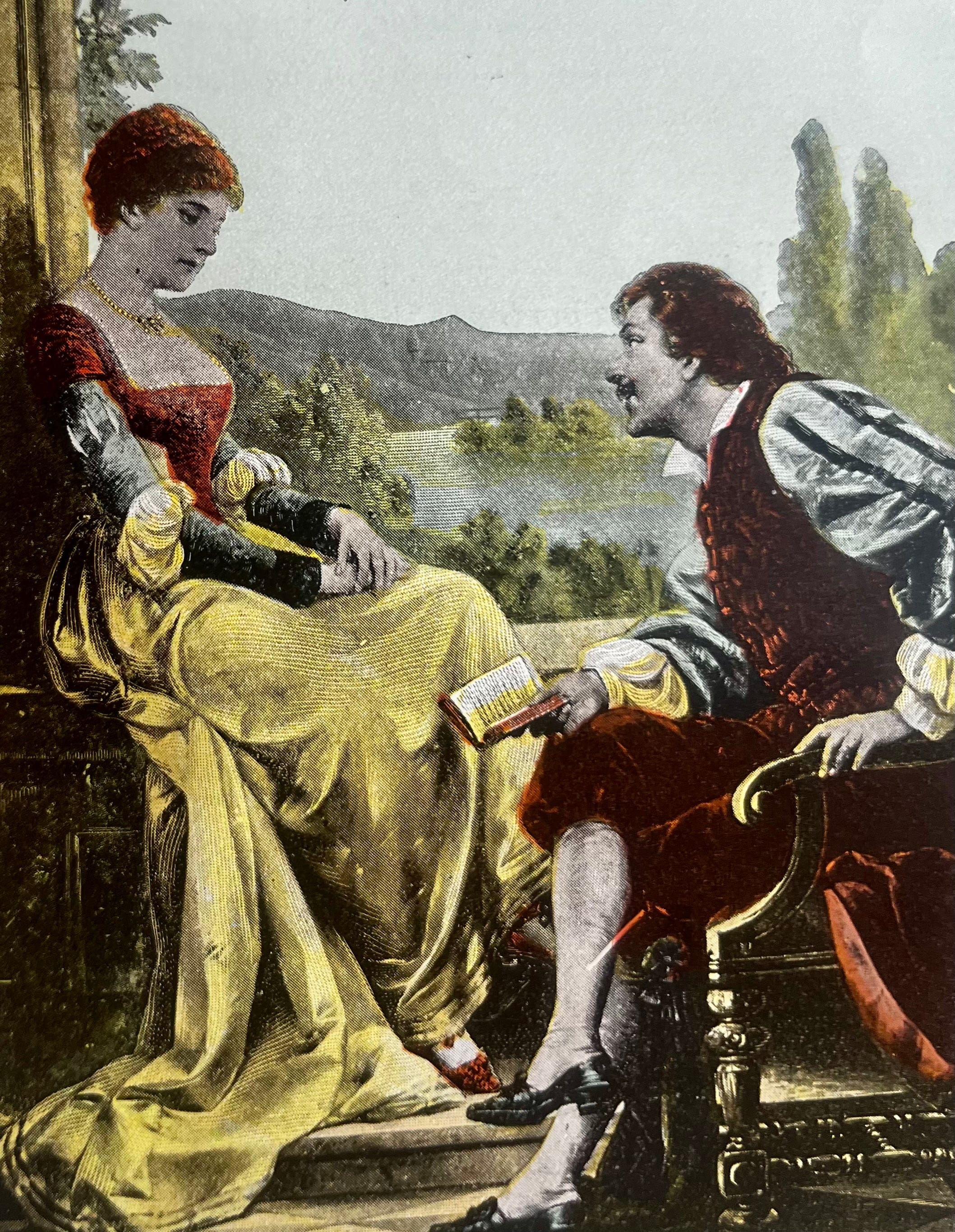
This photo is from an etiquette book (an iPhone snap of a page) written in the late 1800s.
Last week I chatted with two women about the art of the interview. The first, let’s call her Gina, is a famous person who’s been interviewed more times than she can count, and another woman, Diana, who’s interviewed thousands of people because of her line of work, including many famous people.
We’ve all watched awkward interviews. I went to see Fran Lebowitz years ago, and the person they chose to interview her was a lesser-known writer I’ll call Davis. Right away, the chemistry between them was off, and throughout the evening it didn’t improve. Davis seemed to be trying to place himself at the same level as Lebowitz, “here we are, two famous people, talking” and she was having none of it. The whole time, she seemed annoyed to be sharing the stage with him. It was uncomfortable to watch. We all talked about what went wrong afterwards and agreed that Davis tried to put himself on equal footing with Lebowitz, and it didn’t work. Davis talked about himself, as if promoting his own stuff instead of focusing on her.
So, what’s the deal with interviews? Have you been a part of a disastrous interview?
Gina is my famous friend, and it’s been interesting to see her navigate that. Once, when we were out together at an art opening, someone pushed me away to get to Gina, cornering her for several minutes while I stood by awkwardly waiting for the ordeal to end. Before that day, I didn’t fully grasp what it would be like to be a person who suddenly must make themselves available to random strangers. I wanted to know how Gina felt about sitting down for interviews, because she’s done so many, both live and taped, in print and on podcasts.
“I hesitate to be interviewed,” she said. Like the rest of us, she hates being pigeonholed. We chatted about how interviews stay in print–– and online for who knows how long. “The narrative is like being a bug caught in amber,” she said.
She’s wary of the intention coming from the other person holding the pen, the pad or tape recorder, wonders if the agenda for the interview is coming from a certain angle or focus.
“People who work in print or media are not always comfortable with gray matter, they want black and white,” Gina said. She’s wary of intentions. We spoke about how promotional everything has become for everyone, how you need a brand, and it can be cringeworthy.
Gina probably will do more interviews, but she said the narrative is exhausting. “It’s transactional, and I never was that.” In real life, Gina is one of the best conversationalists I know, but interviews can be stifling, stressful, and something to dread…and regret after it’s all over.
Is there a way to make the subject of an interview, whether live on stage or in print, comfortable? Diana thinks so, and when I’ve watched her interview someone, or read her print interviews, it seems so natural. There’s so much work behind that relaxed feeling, though. Diana explained how she preps for an interview.
“I’m always tense and nervous when coming up with questions. What if I don’t have the right questions, or in the right order?” If she’s interviewing someone who’s written a book, she reads the book, and does all her due diligence. She never asks questions that are too general or leads the interviewee down rabbit holes.
When I told Diana about the Fran Lebowitz debacle, she said she always takes a “goofball low status” position, making the interviewee feel at ease.
“Never try to be on the same level,” Diana said.
Her advice is to be generous, never snarky, and no “gotcha questions” that might make the interviewee block out mentally. She knows the interviewee may have feelings of panic, and a feeling of “who do I think I am, talking about myself?” Or worry about how they’ll come across. Diana knows exactly what Gina is experiencing from her side of things and works hard to keep her subjects at ease.
Live interviews can be tricky. Diana has a local arts show, which is taped, where she can assure her subject that anything can be edited out, and not to worry. She’s extremely dialed in and prepared for both live and taped interviews, but more can go wrong live, with an audience.
I don’t think people realize what massive skills it takes to orchestrate a good interview. Sometimes, organizations just choose some random local celebrity to do the job, and it all falls apart. I saw Kareem Abdul-Jabbar interviewed on a stage in my city back in 2016, and they chose a local sportscaster to interview him, which was too bad because Jabbar had written a non-fiction book about the partisan divide (racial and political) from his own perspective as a Muslim American. The sportscaster wasn’t prepared, he kept veering back to the basketball court, as if he hadn’t read the book, which wasn’t about basketball.
“The audience must be clear, they have to be taken on a journey, and it’s up to the interviewer to guide that journey,” Diana said. The Jabbar interview was confusing, because the guy they chose to interview him seemed uncomfortable talking about politics. The book had come out in 2016, and the organization that hosted the event should’ve chosen someone who could engage on that level. In the end, as an audience, we were confused.
More tips from Diana:
Never ask yes or no questions.
Include enough information in the question but don’t go on and on, making the question a monologue.
Ask questions for the audience, think of them, include them.
As the interviewer, don’t respond with “uh huh” or “yeah” which is irritating for the audience, but find ways of engaging with a nod (but no “bobble head”) or with the eyes and facial expressions. It’s an art form, all of this.
Thanks for reading my latest chats. Have you ever been interviewed, and if so, how did it go? Or have you ever interviewed someone, and how did that go?
Love coffee too. -You share that on your little bio of your profile >in case that’s forgotten| Sipping coffee and having a good conversation of meaning is something I miss very very much.
I know another Sea Shepherd, Paul Watson is a Canadian Activist, was a Greenpeace founder.